I have just one question.
How can you claim to make something work topically if the science and biology (skin permeability, etc ) go against it? You know something that all the big pharmaceutical companies making HGH and other peptide treatments dont know and continue to make their products injectable instead of transdermal?
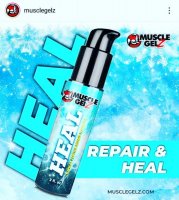
MuscleGelz are actually pharmaceutical grade and manufactured by a FDA approved lab. These products are not capped and mixed in someone's basement sir.
And I am unsure why you aren't aware of this but topical BPC is already in existence. We are not the first brand to use said technology.
Invalid Link Removed
This paper describes 1) the drug delivery through the skin to produce systemic effects, 2) the enhancement of percutaneous absorption by absorption enhancers, heating and complex formation, 3) the mechanism for the enhancement effect by enhancers, 4) the percutaneous absorption of peptides, and 5) the pharmacokinetic analysis for percutaneous absorption. 1,3-Dinitroglycerin, indomethacin (IND) and many drugs were efficiently absorbed via rat and rabbit skins in the presence of some enhancers, and using a microporous membrane therapeutic plasma concentrations were maintained for a long time. Enhancement of percutaneous absorption by the complex formation with fatty acid was observed for propranolol (PL) in vitro and in vivo. Heating at 42-45 degrees C also enhanced the percutaneous absorption dramatically, with decreased activation energies. The following mechanisms for the enhancement effect by enhancers were found: a) an increase in the fluidity of the stratum corneum lipids and reduction in the diffusional resistance to permeants, b) the removal of intercellular lipids and dilation between adherent cornified cells, c) an increase in the thermodynamic activity of drugs in vehicles, d) the exfoliation of stratum corneum cell membranes, the dissociation of adherent cornified cells and elimination of the barrier function. Peptides such as enkephalin, elcatonin and insulin were effectively absorbed through the skin in the presence of some enhancers and specific inhibitors, with no proteolytic degradation. The pharmacokinetic model with two parallel absorption processes, lipidic and aqueous pore transport pathways, in skin could adequately describe the percutaneous absorption of IND, PL and valproic acid. With peptides, a kinetic model including zero-order input rate, first-order permeation rate and first-order degradation rate was able to describe well the steady-state flux of peptides.
will the TD carrier by localized or systematic--personally i would definitely prefer the localized!!!!
Excellent question!
application can be general or site specific: Depending on where you apply the topical you can thus focus on either the systemic or the local effects of BPC-157. Either way it is going to pass into the bloodstream and have a systemic effect.
Invalid Link Removed
The successful delivery of a drug across the skin depends on the physicochemical properties of the drug, such as molecular weight (<500 Da), partition coefficient (1–3) and the potency of the drug, which is recommended to be below 20 mg IV dose/day.[
Invalid Link Removed] However, when dealing with a drug that falls outside of these ranges, the key to successful TDD relies on a high-performance drug delivery device.[
Invalid Link Removed] An efficient TTS must be capable of temporarily reducing or bypassing the SC barrier with the result of enhanced drug delivery to attain a therapeutic plasma drug concentration. Transdermal dosage forms include ointments, creams, gels, and, more commonly, the transdermal “patch.” More recently, newer dosage forms have been launched, such as the metered dose aerosols and ballistic needleless injections.[
Invalid Link Removed–
Invalid Link Removed] The transdermal patch is often favored because the other semi-solid formulations rely on the patient applying the correct amount of the formulation to their skin as the main method of graduating the dose.[
Invalid Link Removed] The concentration of drug in the dosage form and the area of skin to which it is applied are important parameters that affect the permeation rate. This is difficult to achieve using semi-solid dosage forms.[
Invalid Link Removed] Depending on the type of transdermal patch used, the formulation may consist of some or all of the following components: drug, release liner, adhesive, rate-limiting membrane, backing layer, and other excipients. The release liner is used to seal the area of the formulation that will be directly applied to the patient's skin. The presence of a release liner is necessary to control any unintentional release of drug during transport or storage and also to prevent the formulation adhering to the packaging. The backing layer (the area of the formulation that is visible after application) forms a protective covering before and during use and it may also have the effect of occluding the skin and therefore raising the hydration level of SC, which may aid drug permeation across the skin. The rate-limiting membrane is used to prevent leakage from a semi-solid or liquid reservoir while also ensuring that the release of the drug from the reservoir occurs at the desired rate.



 Two things I love smashed together.




 I've done this