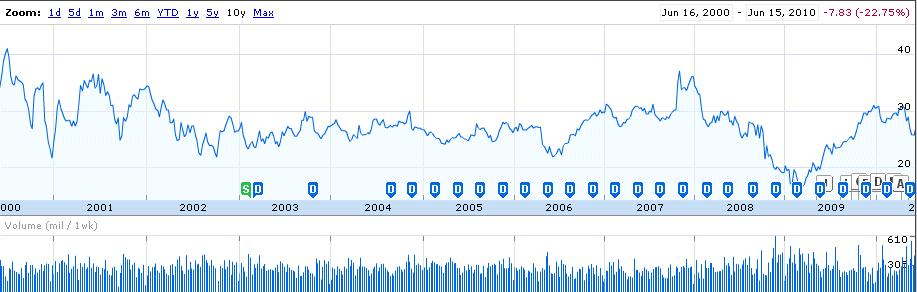
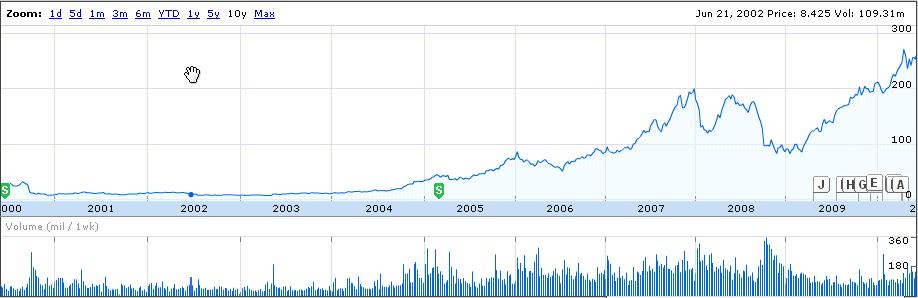
But yet, someone else pointed to MACs at the premier graphics design, which will never be done on a tablet. Business sales is what is the driving factor in technology, and because of Active Directory and the standard office package, that is moving away from MS no time soon. Sure the tablet is so cool for the consumer tech gadgetry, Apple has that cornered bar none. Business will never move that way. Workstations and Servers leverage more capital than an Iphone/Pod, and that is still cornered by MS.
Nobody ever said business is going the way of the gadget. The point was more towards home users, not business in which most of their money is made off corporate contracts.
Which is funny that people mention Apple for graphic design since they are not the standard anymore since the inception of CUDA and FERMI.
Nobody stated they were a standard. I stated they were the preference over the last 3 decades. And they have been.
As for where the money is made in MS, that is incorrect as well.
No its not.
"While the bulk of Microsoft’s profits derive from corporate contracts, a significant minority of its profits is derived from consumers, and Microsoft is a common name both at home and work."
Products and Service Offerings
Microsoft’s products and service offerings fall into five divisions or business sectors:
* Client (28% of revenue and 45% of net income in FY2009[9][10][11][12][13]): The client segment, accounting for approximately 28% of total revenue, includes sales and marketing expenses for the Windows operating system.
80% of this revenue is from the sale of products with pre-install versions of Windows operating systems.[14]
In an effort to strengthen its grip on the PC market, Microsoft launched Windows 7 on October 22, 2009 replacing its disappointing Vista. The release comes three year after the launch of Vista, which frustrated many home users and turned off business customers due to its sluggishness, intrusiveness, and incompatibility with many gadgets. By summer 2009, two-thirds of corporate computers were still running Windows XP. The success of Windows, which accounts for more than half of Microsoft’s profits, is crucial to revive the company’s image and its share in the PC market. Windows 7 is faster, less cluttered, and has new touch-screen features, while keeping Vista’s security and stability; it is an improvement from Vista. [15]
* Server and Tools - Products for IT Professionals (22% of revenue and 16% of net income in FY2009[9][10][11][12][13]): The Server and Tools segment, which accounts for approximately 22% of Microsoft’s revenue, develops and markets software server products, services, and solutions such as Windows Server 2008 and Visual Studio 2008. Approximately 45% of Server and Tools revenue comes from multi-year licensing agreements, 25% through fully packaged product and transactional volume licensing programs, and 10% from licenses sold to original equipment manufacturers (OEMs).[16]
* Business (32% of revenue and 42% of net income in FY2009[9][10][11][12][13]): Microsoft Business Division (“MBD”), accounting for approximately 32% of Microsoft’s revenue, includes the Microsoft Office system (about 90% of MBD revenue) and Microsoft Dynamics business solutions. Approximately 80% of MBD revenue is generated from sales to businesses, the rest being derived from sales to consumers. [17]
* Online Services (5% of revenue and -4% of net income in FY2009[9][10][11][12][13]): The Online Services Business (“OSB”), approximately 5% of Microsoft’s revenue, consists of an on-line advertising platform with offerings for both publishers and advertisers, personal communications services such as email and instant messaging, online information offerings such as Live Search, and the MSN portals and channels around the world.[18] In 2008, this included new releases of Windows Live Search, the Windows Live suite of applications and services, and their MSN Video Service. Revenue comes primarily from online advertising.
* Entertainment and Devices (13% of revenue and 1% of net income in FY2009[9][10][11][12][13]): Approximately 13% of total revenue, Entertainment and Devices is the most high-profile aspect of Microsoft’s expansion, E&D includes the highly successful Xbox and Xbox 360 video game consoles, a large collection of Microsoft-licensed video and computer game titles (including Halo and the Age of Empires series), Windows Mobile and Automotive (operating systems for mobile and car navigation devices), and the Zune mp3 player (designed to compete with Apple's iPod).[19]. "
Software as a Service Threatens Microsoft's Long-Term Business
The growth of SaaS means there is more competition for traditional Microsoft products like Microsoft Office. Browser-based software represented approximately 5 percent of business software revenue in 2005 and, by 2011, 25 percent of new business software will be delivered as SaaS, according to Gartner, Inc. [22] Although shareware, open-source, or low-cost alternative software (like Google (GOOG) Apps, and Open Office by Sun Microsystems ) are still several years away from the security and functionality most businesses need, analysts agree that software will continue to move towards these browser-based models in the long term. Microsoft is taking steps to benefit from this trend itself, starting with the release of a new version of its Microsoft Exchange Server that is available on demand. Furthermore, the next Office suite will be available as On Demand on the internet. [23]
Trends and Forces
Another trend, the shift from client-server to Service-Oriented Architecture (SOA), marks the further and parallel movement of the server industry in the direction of On Demand. Here, the companies that may stand to benefit the most are those with solid bases in the small-to-medium business market, such as Oracle (ORCL). Linux software distributor Red Hat may also benefit significantly, since the resulting restructuring of the software industry could mean a revival of interest in open-source alternatives. Microsoft may have a lot of ground to make up in this area.
Competition
Microsoft's involvement in many different aspects of technology and computing result in competitive pressure from a number of different sources:
* Apple and Oracle: in the world of operating systems, Oracle is a far greater threat to Microsoft than Apple. Despite consumer migration towards Apple desktops and netbooks, especially in the younger generations, Apple is lacking Microsoft's Windows in most corporate environments. (And as for private consumers, Microsoft has enjoyed a kind of synergy with Apple since the release of Windows and Office for Apple.) However, Oracle is a different story and stands poised to challenge Microsoft, both obliquely through its support of Lintel (Linux OS plus Intel processor chips), and directly in replacing Microsoft's developer base with its own improved Linux-based developer platform).
* Google is Microsoft's primary competitors in Internet Services outperforming Microsoft by a wide margin. In an effort to stiffen competition in this field, Microsoft signed a ten-year partnership with Yahoo! in February 2010 to use the Bing search engine on Yahoo's site while Yahoo focuses its internal personnel on a more aggressive sales effort [27]. Under the terms of the revenue-sharing agreement, Yahoo will receive 78% of the search revenue generated from Microsoft's sites during the first 5 years of the agreement and 88% of search revenue generated from Yahoo's sites. This leaves Microsoft with 10% of the search advertising business to Google's 90%[28]. Google also competes with Microsoft through its cloud-computing based software offerings.
* Sony and Nintendo: Microsoft's two primary competitors in the Entertainment sector both have much more history in the industry than the Xbox-touting newcomer does. However, Nintendo's gaming system has no pretensions to the "media center" status that the Xbox and PS3 try for with their integrated HDTV and Blu-Ray technologies. This puts the price of the Wii much lower, but it also removes Nintendo from participation in the bigger race: dominance in the media center, and tech advantage in manufacturing next-generation-graphics player consoles. As for Sony, PS3's prominence and potential recovery remains a very real threat for the Xbox 360. However, Sony's botched launching process significantly reduced introductory momentum and excitement surrounding the PS3, and the prohibitively expensive system may suffer even more if Microsoft delivers on anticipated Xbox price cuts.
Other competitors include SAP (servers), Red Hat (Linux software), Symantec (Internet Security) and Cisco (internet telephony).
In the non-commercial sector, there are significant forces at work which have slowly but importantly been reshaping the character and depth of product offerings which provide viable alternatives to Microsoft products with powerful, free operating systems software, language translators, editors, and utility programs numbering in the thousands, particularly attractive to sophisticated users. These applications are in use by millions of users around the world. See The Free Software Foundation (fsf.org), Debian GNU/Linux (debian.org),and other Linux variants, Vim/Gvim (vim.org), Perl (perl.org), mailers and browsers such as Mozilla (mozilla.org), Opera (opera.com), among many, many others. What their overall impact is on Microsoft is difficult to guage, but their influence on the user community is not inconsequential and will only grow over time.
The point? Overtime their almost monopoly like status will be eroded and has been for 10 years.



 .
.