

Abstract
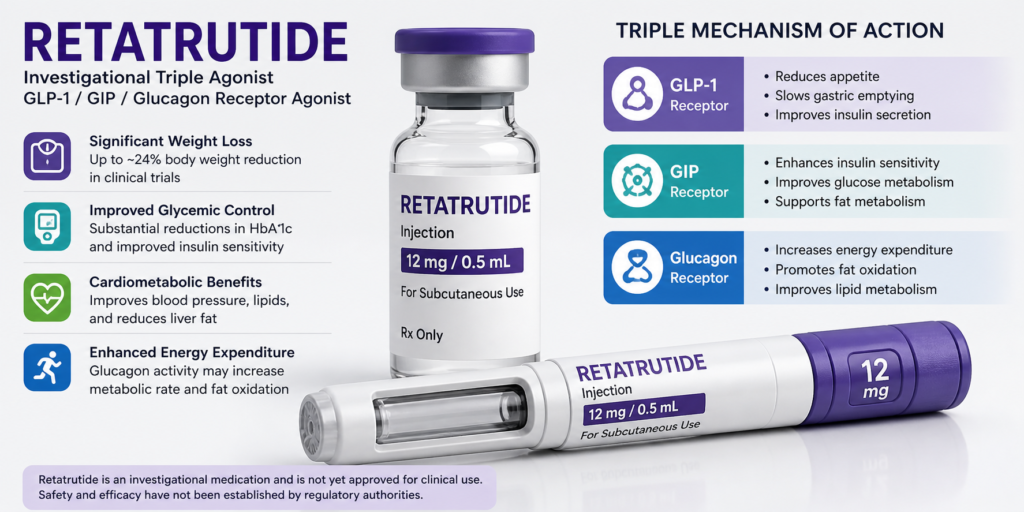
Retatrutide is a next-generation investigational medication developed for the treatment of obesity, type 2 diabetes mellitus, and associated metabolic disorders. Unlike earlier therapies such as semaglutide and tirzepatide, retatrutide activates three distinct hormonal receptors simultaneously: glucagon-like peptide-1 (GLP-1), glucose-dependent insulinotropic polypeptide (GIP), and glucagon receptors. This “triple agonist” mechanism may produce greater weight reduction and metabolic improvement than currently approved incretin-based therapies. This article reviews the pharmacology, clinical benefits, and comparative advantages of retatrutide relative to semaglutide and tirzepatide.
Introduction
Obesity has become one of the most significant global health challenges, contributing to cardiovascular disease, type 2 diabetes, hypertension, fatty liver disease, and reduced life expectancy. Pharmacologic treatment has evolved rapidly with the development of incretin-based therapies that target appetite regulation and glucose metabolism.
Semaglutide revolutionized obesity treatment as a potent GLP-1 receptor agonist. Tirzepatide expanded this concept by combining GLP-1 and GIP receptor activity. Retatrutide advances further by incorporating glucagon receptor activation, creating a triple-hormone therapeutic strategy that may enhance energy expenditure in addition to appetite suppression.


Mechanism of Action
Semaglutide
Semaglutide is a selective GLP-1 receptor agonist. It works primarily by:
- Suppressing appetite
- Slowing gastric emptying
- Enhancing insulin secretion
- Improving satiety
This mechanism produces substantial weight loss and improved glycemic control, but its effects are largely dependent on caloric intake reduction.
Tirzepatide
Tirzepatide is a dual agonist targeting:
- GLP-1 receptors
- GIP receptors
Compared with semaglutide, tirzepatide demonstrates:
- Greater appetite suppression
- Improved insulin sensitivity
- Enhanced glucose control
- Increased weight reduction
The addition of GIP activity appears to improve metabolic flexibility and adipose tissue regulation.
Retatrutide
Retatrutide is unique because it stimulates:
- GLP-1 receptors
- GIP receptors
- Glucagon receptors
The glucagon receptor component may:
- Increase energy expenditure
- Promote fat oxidation
- Raise metabolic rate
- Enhance lipid metabolism
This additional pathway differentiates retatrutide from both semaglutide and tirzepatide.
Comparative Weight Loss Outcomes
Clinical trial data suggest progressively greater weight reduction across the three therapies.
| Medication | Primary Receptor Activity | Average Weight Loss |
|---|---|---|
| Semaglutide | GLP-1 | ~15% |
| Tirzepatide | GLP-1 + GIP | ~20–22% |
| Retatrutide | GLP-1 + GIP + Glucagon | Up to ~24% |
Phase 2 retatrutide studies demonstrated weight reductions approaching levels traditionally associated with bariatric surgery.


Metabolic and Glycemic Benefits
Semaglutide
Semaglutide significantly lowers HbA1c and improves insulin secretion. It is highly effective for type 2 diabetes and cardiovascular risk reduction.
Advantages
- Strong cardiovascular evidence
- FDA-approved for obesity and diabetes
- Extensive long-term safety data
Limitations
- Plateau in weight loss for some patients
- Gastrointestinal side effects
- Less metabolic stimulation compared with newer agents
Tirzepatide
Tirzepatide generally produces greater HbA1c reduction and weight loss than semaglutide.
Advantages
- Superior glucose control
- Greater reductions in body fat
- Improved insulin sensitivity
Limitations
- Gastrointestinal adverse effects remain common
- Long-term cardiovascular data are still evolving
Retatrutide
Retatrutide may provide the broadest metabolic benefits because of glucagon-mediated energy expenditure.
Potential Advantages
- Greater total weight reduction
- Enhanced fat burning
- Reduced liver fat accumulation
- Improved lipid metabolism
- Possible superior metabolic flexibility
Investigational Areas
Researchers are currently evaluating retatrutide for:
- Metabolic dysfunction-associated steatotic liver disease
- Obstructive sleep apnea
- Osteoarthritis associated with obesity
- Cardiovascular disease prevention
Cardiovascular and Liver Effects
All three medications demonstrate favorable cardiometabolic effects, including:
- Reduced blood pressure
- Improved cholesterol levels
- Reduced inflammation
- Better glycemic stability
However, retatrutide may produce stronger reductions in liver fat because glucagon receptor activation enhances hepatic fat metabolism.

Side Effects and Safety
The most common adverse effects for all three medications are gastrointestinal and include:
- Nausea
- Vomiting
- Diarrhea
- Constipation
- Abdominal discomfort
Comparative Tolerability
| Medication | GI Side Effects | Clinical Experience |
|---|---|---|
| Semaglutide | Moderate | Extensive long-term data |
| Tirzepatide | Moderate to High | Growing evidence base |
| Retatrutide | Potentially Highest | Still investigational |
Retatrutide’s glucagon activity may contribute to increased gastrointestinal symptoms and elevated heart rate in some patients, although ongoing studies are evaluating long-term safety.
Regulatory Status
- Semaglutide is FDA-approved for obesity and type 2 diabetes.
- Tirzepatide is FDA-approved for obesity and type 2 diabetes.
- Retatrutide remains investigational and is currently undergoing Phase 3 clinical trials as of 2026.
Conclusion
Retatrutide represents the newest evolution in incretin-based metabolic therapy. While semaglutide established GLP-1 agonism as a transformative obesity treatment and tirzepatide improved outcomes through dual agonism, retatrutide introduces triple-receptor activation that may further enhance weight loss and metabolic improvement.
Early evidence suggests retatrutide could become one of the most effective pharmacologic therapies for obesity and metabolic disease currently in development. However, additional long-term safety and cardiovascular outcome studies are still required before widespread clinical adoption.