
Guest viewing limit reached
- You have reached the maximum number of guest views allowed
- Please register below to remove this limitation
You are using an out of date browser. It may not display this or other websites correctly.
You should upgrade or use an alternative browser.
You should upgrade or use an alternative browser.
Protein before bed = more gains
- Thread starter JudoJosh
- Start date
canveylad2
Member
Cottage cheese and natty peanut butter on rice cakes is my bed time poison

Driven2lift
Legend
The control group got a calorie free placebo?
Don't like it.
Want a control group with equivalent calories and protein intake.
Don't like it.
Want a control group with equivalent calories and protein intake.

LeanEngineer
Legend
I just always have my cottage cheese with nuts and then a casein shake.


john.patterson
Well-known member
So was the group with the noncalorie placebo getting the same overall daily calories? If they were skipping that meal which is roughly 180 calories, then they were consuming less total calories for the whole study. Sounds shady to me
canveylad2
Member
All these studies are shady as 90% aren't related to everyday life

The Solution
Legend
The control group got a calorie free placebo?
Don't like it.
Want a control group with equivalent calories and protein intake.
Anyone can eat 28g of protein before bed and get gains (assuming surplus and protein minimums are met)
Are they meeting daily protein intake? if they eat 50g or 25g before bed what matters is meeting daily protein intake not 28g's worth.

Aleksandar37
Well-known member
Has anybody other than Josh actually read the paper? Let's look at the actual methods before we break out the science is shady torches. I can't access the full text and the clinicaltrials.gov site doesn't give much more info than the abstract, so looking forward to actually seeing what they did.

bdcc
Legend
I'll pull the FT after finals today and see if calories were matched
I haven't read the FT yet but a photo of the statistics table was posted in the ISSN group and it was 1.3g/kg for the control group and 1.9g/kg for the protein group.
Driven2lift
Legend
I haven't read the FT yet but a photo of the statistics table was posted in the ISSN group and it was 1.3g/kg for the control group and 1.9g/kg for the protein group.
Saw this too,
Lame

JudoJosh
Pro Virili Parte
I haven't read the FT yet but a photo of the statistics table was posted in the ISSN group and it was 1.3g/kg for the control group and 1.9g/kg for the protein group.
Do you know what the per kcal daily intake was? Looked like the 28g was an additional PRO intake but from what you posted the control group was within range so not sure if this difference alone would explain the difference in strength and muscle gain as the control group received adequate protein.
Aleksandar37
Well-known member
So calories were roughly the same, but one group got more protein. Yeah, this is dumb.
JudoJosh
Pro Virili Parte
I just got out of class after taking my last final of the semester (yay!!) So can't see the image since I'm on my phone currently but from Alek comment I'm assuming they were pretty equal which is interesting
Well, in the reductionist land of IIFYM, where a calorie is a calorie and timing has no effect, this would seem to suggest otherwise.
IIFYM logic would have predicted gains to have been equal because both groups had sufficient protein intake and equal kcals.
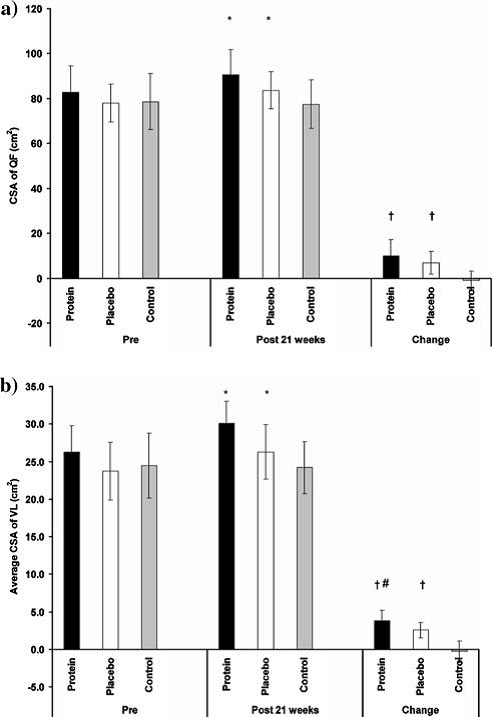
I do agree it would have been nice to match pro to see if it was just timing caused the change but I still find the paper interesting and suggestive that pro intake pre bed might be beneficial. I mean, the CSA of the quads doubled in the experimental group. Are we to think this was simply a result of am extra 28g of protein? Especially in light of the fact that both groups were caloriclly matched?
So calories were roughly the same, but one group got more protein. Yeah, this is dumb.
Well, in the reductionist land of IIFYM, where a calorie is a calorie and timing has no effect, this would seem to suggest otherwise.
IIFYM logic would have predicted gains to have been equal because both groups had sufficient protein intake and equal kcals.
I do agree it would have been nice to match pro to see if it was just timing caused the change but I still find the paper interesting and suggestive that pro intake pre bed might be beneficial. I mean, the CSA of the quads doubled in the experimental group. Are we to think this was simply a result of am extra 28g of protein? Especially in light of the fact that both groups were caloriclly matched?
Nyrin
Active Member
IIFYM logic would have predicted gains to have been equal because both groups had sufficient protein intake and equal kcals.
The question of timing is conflated with overall daily intake in this case. Going from 1.3g/kg to 1.9g/kg is a nearly 50% increase in daily protein intake within a range that's already been repeatedly substantiated to benefit from increase; I believe something around 1.9g/kg is the highest upper limit that's been shown to be beneficial, but going from 1.3 to 1.9 is huge.
I don't doubt that there could be something interesting here, but this study certainly doesn't seem to do much to explore it.
JudoJosh
Pro Virili Parte
I feel percentage change is a poor way to look at this. It gives a false impression of there being a huge difference when in reality there isnt. Yea it's almost a 50% increase (around 46%) but what that increase really is, is just 28 extra grams. An extra 28g was the sole cause of the difference found here? Also 1.3g/kg is more than adequate intake and remember my comment here (the one you are quoting) is directed at IIFYM logic. And that logic dictates that if you are getting enough protein and calories (which 1.3 is considered enough) and enough calories (both groups had same calories) than there should be no change between groups. If a calorie is a calorie and all that matters is CI-CO then we should see no change, but we did. So it's either a measly 28g extra on top of already sufficient protein intake doubled CSA of the quads or the timing had an effect on it (or a combination of course)The question of timing is conflated with overall daily intake in this case. Going from 1.3g/kg to 1.9g/kg is a nearly 50% increase in daily protein intake within a range that's already been repeatedly substantiated to benefit from increase; I believe something around 1.9g/kg is the highest upper limit that's been shown to be beneficial, but going from 1.3 to 1.9 is huge.
I don't doubt that there could be something interesting here, but this study certainly doesn't seem to do much to explore it.
I'm inclined to think timing played a role here, especially since this paper isn't really an anomaly. There is another one showing pre bed protein has a positive effect on lbm gains

halljo
Active Member
I don't know about this study but know that when I finally started using a Casein shake before bed (30-35 grams of protein) and two slices of rye bread with a little bit of natural pb on it, I started seeing some good results. I wasn't starving my body all night long anymore and seemed to be recouping quicker and holding onto more gains. It's my norm now. I think it's definitely beneficial

MidwestBeast
Legend
The question of timing is conflated with overall daily intake in this case. Going from 1.3g/kg to 1.9g/kg is a nearly 50% increase in daily protein intake within a range that's already been repeatedly substantiated to benefit from increase; I believe something around 1.9g/kg is the highest upper limit that's been shown to be beneficial, but going from 1.3 to 1.9 is huge.
I don't doubt that there could be something interesting here, but this study certainly doesn't seem to do much to explore it.
That's kind of how I view it.
NewAgeMayan
Well-known member
Hmmm.
Why might those who designed the study have made what appears to be such an elementary mistake (not standardising pro intake)?
Why might those who designed the study have made what appears to be such an elementary mistake (not standardising pro intake)?
JudoJosh
Pro Virili Parte
To paraphrase Schoenfeld, you can always tell who the people are who aren't involved in research by reading their critiques of research.
There is this idea that some people have that there exist perfect papers when in reality no such papers exist. Furthermore, what they think a perfect paper is, is a paper that is usually the results of decades of previous research. They have no grasp of what preliminary research is or how research sometimes has to be not as inclusive because of funding or logistic issues. They fail to realize that sometimes research is done intentionally with gaps, such as a paper that is just probing to see if something is found than follow ups are done. The concept of preliminary papers are lost on them.
As I said before, this paper was done as the result of a previous paper finding a similar conclusion. This paper expanded on this. Most likely we will see a paper in the near future with tighter controls seeing if the change still exist.
Not every paper is done in met labs or use radiographic imagery to see body fat, etc.. and that's ok. Yes this paper is limited BUT it still directly refutes IIFYM logic. Either a calorie isn't just a calorie or timing does play a role (or a combination of both).
There is this idea that some people have that there exist perfect papers when in reality no such papers exist. Furthermore, what they think a perfect paper is, is a paper that is usually the results of decades of previous research. They have no grasp of what preliminary research is or how research sometimes has to be not as inclusive because of funding or logistic issues. They fail to realize that sometimes research is done intentionally with gaps, such as a paper that is just probing to see if something is found than follow ups are done. The concept of preliminary papers are lost on them.
As I said before, this paper was done as the result of a previous paper finding a similar conclusion. This paper expanded on this. Most likely we will see a paper in the near future with tighter controls seeing if the change still exist.
Not every paper is done in met labs or use radiographic imagery to see body fat, etc.. and that's ok. Yes this paper is limited BUT it still directly refutes IIFYM logic. Either a calorie isn't just a calorie or timing does play a role (or a combination of both).

Jiigzz
Legend
FT available from link.
Another:
Invalid Link Removed
Protein intake and energy intake were matched, mostly (fluctuated between each group having a higher total kcal intake)
Another:
Invalid Link Removed
In conclusion, protein intake close to resistance exercise workout may alter mRNA expression in a manner advantageous for muscle hypertrophy.
Protein intake and energy intake were matched, mostly (fluctuated between each group having a higher total kcal intake)
MidwestBeast
Legend
There is this idea that some people have that there exist perfect papers when in reality no such papers exist. Furthermore, what they think a perfect paper is, is a paper that is usually the results of decades of previous research. They have no grasp of what preliminary research is or how research sometimes has to be not as inclusive because of funding or logistic issues. They fail to realize that sometimes research is done intentionally with gaps, such as a paper that is just probing to see if something is found than follow ups are done.
I agree with this and my research has been social sciences; not science, but I grasp the concepts here. That said, I haven't read anything beyond what has been posted here, but it would be interesting if any of this is/was covered in the discussion portion of the paper (e.g. acknowledging the disparity and explaining why it was done or what benefits it may have).
Last edited:
JudoJosh
Pro Virili Parte
I will concede and say that I should have included the caveats (limitations of the paper) with my initial post and been clear about what the take aways were from this and that my initial post was "bro-ish" with being overly suggestive. I dropped the ball here  I do usually try and make those things clear. Guess I am just getting lazy :/
I do usually try and make those things clear. Guess I am just getting lazy :/
JudoJosh
Pro Virili Parte
Yea, research of this nature is considered a soft science similar to social sciences. So expectations are a bit different than say a paper on cellular signalling.I agree with this and my research has been social sciences; not science, so I grasp the concepts here. That said, I haven't read anything beyond what has been posted here, but it would be interesting if any of this is/was covered in the discussion portion of the paper (e.g. acknowledging the disparity and explaining why it was done or what benefits it may have).
I think sometimes people get too caught up on tryna to find ways to dismiss papers that they end up missing the forest for the trees. Research with humans like this is always going to have a limitations. It comes with the territory, and coincidently why animal models are often used. Plus, papers like this provides the groundwork for the funding of future papers that end up being slightly better designed. Again, look at one of the really good designed papers and they won't be first time investigations into a phenomena. There usually is dozens of previous papers that looked into it that laid the groundwork for the more better designed paper to be done.
Jiigzz
Legend
So was the group with the noncalorie placebo getting the same overall daily calories? If they were skipping that meal which is roughly 180 calories, then they were consuming less total calories for the whole study. Sounds shady to me
People are missing the point here by a mile.
Lets take a step backward. If meal timing is largely stated to be irrelevant, then not matching intake at ONE meal shouldn't matter as long as total daily energy was matched
IIFYM people love to say that getting intake over 6 meals or 2 doesn't make a difference, so if this study decided to use a noncaloric at the same time because energy was matched roughly in total.
All these studies are shady as 90% aren't related to everyday life
How is this study shady?
JudoJosh
Pro Virili Parte
Jiigzz protein wasn't excatly matched. The experimental group had slightly more protein (28g)
At least that is my impression from what bdcc posted earlier.
Also the hulumi paper above you linked to is not the same paper. Not sure of you got the papers mixed up or you shared that one with a different purpose (to add to discussion? )
At least that is my impression from what bdcc posted earlier.
Also the hulumi paper above you linked to is not the same paper. Not sure of you got the papers mixed up or you shared that one with a different purpose (to add to discussion? )
NewAgeMayan
Well-known member
To paraphrase Schoenfeld, you can always tell who the people are who aren't involved in research by reading their critiques of research. They have no grasp of what preliminary research is or how research sometimes has to be not as inclusive because of funding or logistic issues.
Interesting post, but I fail to see the relevance in this particular case.
Do you really think the pro difference was a minor oversight? I think it could be a major contributing variable; one must wonder about the decision making process of the study designers when a bunch of laymen can see obvious areas for vast improvement.
My post above was somewhat rhetorical; giving the designers the benefit of the doubt in regards to their methodology, what am I missing or not seeing?
Jiigzz
Legend
Jiigzz protein wasn't excatly matched. The experimental group had slightly more protein (28g)
At least that is my impression from what bdcc posted earlier
I didn't mean protein match for this study, but the quote was about missed energy from one meal, but the shortfall in energy was made up to provide roughly standardized calories.
I was just making a statement that if energy and protein is matched, then we should see roughly the same % changes going by IIFYM

Jiigzz
Legend
Jiigzz protein wasn't excatly matched. The experimental group had slightly more protein (28g)
At least that is my impression from what bdcc posted earlier.
Also the hulumi paper above you linked to is not the same paper. Not sure of you got the papers mixed up or you shared that one with a different purpose (to add to discussion? )
Added for more discussion
JudoJosh
Pro Virili Parte
That has a login screen. Need to download the pdf and upload to a hosting siteHeres the FT for the original text: Invalid Link Removed
JudoJosh
Pro Virili Parte
Invalid Link Removed
So I looked at the protein intakes. The difference here is laughable.
The placebo group got 103 +/- 7 and the experimental group got 106 +/- 8
So CSA doubled and strength improved because the experimental group got a whopping 3 more grams of protein? Yea, this seems plausible. Timing played zero role here
So I looked at the protein intakes. The difference here is laughable.
The placebo group got 103 +/- 7 and the experimental group got 106 +/- 8
So CSA doubled and strength improved because the experimental group got a whopping 3 more grams of protein? Yea, this seems plausible. Timing played zero role here
Driven2lift
Legend
But it is a pretty lame oversight and they were tracking protein, we also know extra protein can have these effects
Would have been a smart adjustment
Would have been a smart adjustment

breezy11
Well-known member
Invalid Link Removed
So I looked at the protein intakes. The difference here is laughable.
The placebo group got 103 +/- 7 and the experimental group got 106 +/- 8
So CSA doubled and strength improved because the experimental group got a whopping 3 more grams of protein? Yea, this seems plausible. Timing played zero role here
But I thought nothing mattered anymore? :think:
NewAgeMayan
Well-known member
So I looked at the protein intakes. The difference here is laughable.
The placebo group got 103 +/- 7 and the experimental group got 106 +/- 8
So CSA doubled and strength improved because the experimental group got a whopping 3 more grams of protein? Yea, this seems plausible. Timing played zero role here
Where did the 1.3 vs 1.9 figures come from (discussed above)? I cant read any of these attachments.
Driven2lift
Legend
This, why was the chart inaccurate?Where did the 1.3 vs 1.9 figures come from (discussed above)? I cant read any of these attachments.
JudoJosh
Pro Virili Parte
Where did the 1.3 vs 1.9 figures come from (discussed above)? I cant read any of these attachments.
This, why was the chart inaccurate?
Nevermind, it looks like the total protein intake numbers didn't include the supplemental protein in it. So it is 1.3g/kg to 1.6g/kg change in intake
JudoJosh
Pro Virili Parte
Here is a paper from 2012 where the researchers gave the subjects protein or placebo prior to sleep and then did muscle biopsies in the morning and found the protein group experienced greater whole body protein retention while the placebo group experienced a slight loss
Invalid Link Removed
This is online with what was found in the OP paper.
Invalid Link Removed
This is online with what was found in the OP paper.
Jiigzz
Legend
Here is a paper from 2012 where the researchers gave the subjects protein or placebo prior to sleep and then did muscle biopsies in the morning and found the protein group experienced greater whole body protein retention while the placebo group experienced a slight loss
Invalid Link Removed
This is online with what was found in the OP paper.
It is an interesting concept. I also forget that working within a university grants me automatic access to a lot of papers :/
NewAgeMayan
Well-known member
Nevermind, it looks like the total protein intake numbers didn't include the supplemental protein in it. So it is 1.3g/kg to 1.6g/kg change in intake
Just so Im clear, if I were 100kg and...
...in the placebo group, I would have a pro intake of 130gm/day
...in the experimental group, I would have a pro intake of 160gm/day PLUS an additional 27.5gm (supplemented prior to bed), so 187.5gm pro total /day
Correct?

Hockeyaus33
Veteran member
I have always found IIFYM to be sketchy. Timing is everything, and that goes for all aspects of life
Jiigzz
Legend
Just so Im clear, if I were 100kg and...
...in the placebo group, I would have a pro intake of 130gm/day
...in the experimental group, I would have a pro intake of 160gm/day PLUS an additional 27.5gm (supplemented prior to bed), so 187.5gm pro total /day
Correct?
The protein intake before supplementation was 1.3g/kg.bw for control and roughly 1.4g/kg.bw for the supplementation group.
Thats a very small g/kg variance before supplementation.
In fact before supplementation it was roughly a 3g variance between groups.