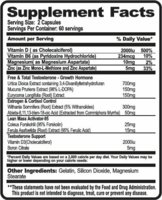
2. (-)-3,4-divanillyltetrahydrofuran (DVTHF)
(-)-3,4-divanillyltetrahydrofuran (DVTHF) is an extract from the stinging nettle
root (Schöttner et al., 1997). DVTHF exerts its effects by acting on testosterone transport
proteins. Testosterone in the human body exists either in a free circulating form or in
inactive form bound to transport proteins. The transport proteins to which testosterone
binds are albumin and sex hormone binding globulin (SHBG) (Neischlag et al., 2004).
14
DVTHF binds with very high affinity to SHBG (Ka = 3.2 +/- 1.7 x 10(6)M-1) (Schöttner
et al., 1998). It is hypothesized that by binding to SHBG, DVTHF will increase the
concentration of free testosterone. Due to the anabolic nature of testosterone, a higher
concentration of free testosterone should translate into enhanced exercise performance
manifested by an increase in muscle mass and strength. Also, it is hypothesized that
DVTHF might positively influence body composition by increasing muscle mass and
reducing body fat levels. This positive influence on muscle tissue is due to the higher rate
of protein synthesis that occurs due to more availability of free testosterone binding to the
androgen receptors on skeletal muscle tissue. Studies have shown that DVTHF binds to
SHBG, however no studies have been conducted to show that more free testosterone will
be available.
Notable benefits associated with the plant in which DVTHF is extracted include
effective treatment protocols for benign prostatic hyperplasia (BPH) (Schöttner et al.,
1997). Another benefit of Urtica dioica extracts is its blood glucose lowering effect. It
has been used as a hypoglycemic for centuries in Persia as it has been noted in writings of
Avicenna (981-1037), a prominent Persian medical scholar (Farzami et al., 2003). Its
therapeutic blood sugar balancing effects are a result of enhancement of insulin secretion
by Islets of Langerhans (Farzami et. al., 2003) and by reduction of intestinal glucose
absorption (Bnouham et. al., 2003). In addition to its hypoglycemic effects, Urtica dioica
is used in traditional medicine to treat hypertension (Testai et al., 2002). Urtica dioica’s
antihypertensive effects are attributed to vasorelaxing effects due to an upregulation of
nitric oxide production in endothelial cells (Testai et al., 2002). Finally, Urtica dioica
15
exhibits antioxidant, antimicrobial, antiulcer, and analgesic properties (Gulcin et al.,
2004).