
You are using an out of date browser. It may not display this or other websites correctly.
You should upgrade or use an alternative browser.
You should upgrade or use an alternative browser.
Alcohol
- Thread starter Delboss731
- Start date

LoveCompeting
Active Member
Yep happened to me it was intense.
For real
There are times I get a hint of being geeked out if I drink coffee after taking a fat burner during fasted cardio a couple hours earlier. Not joking either the feeling sucks. Back in the day when I felt like that a couple drinks would take the edge off. But now that those days are gone I just have to put up with it. Walking around at work on edge because I think people might think I look like I'm high or something even though its only coffee and my pre workout fat burner lol.

muscleupcrohn
Legend
But it’s not illegal, wont have the same physical/physiological adverse effects (caffeine is quite safe), is way cheaper, etc. If caffeine is the strongest most illicit thing you’re addicted to, your doing alright IMO.Whats ironic is that if a person is a former cocaine abuser and takes in enough caffeine it can trigger something in their brain which gives them a false high of being on blow. They can experience the same side effects they used to get when they were on cocaine. Not as much but still enough to notice and feel different. Thats why they are all addicted to caffeine now.
LoveCompeting
Active Member
But it’s not illegal, wont have the same physical/physiological adverse effects (caffeine is quite safe), is way cheaper, etc. If caffeine is the strongest most illicit thing you’re addicted to, your doing alright IMO.
I agree. I'll admit I love taking stimmed pre workouts due to my history of stimulant use during my younger years. I was a little let down when they decided to take DMAA off the market again. I do look forward to my caffeine kick every morning at the gym or with my coffee though.

Bintherduntht
Well-known member
It only happened to me for about a month after my chronic coke use.There are times I get a hint of being geeked out if I drink coffee after taking a fat burner during fasted cardio a couple hours earlier. Not joking either the feeling sucks. Back in the day when I felt like that a couple drinks would take the edge off. But now that those days are gone I just have to put up with it. Walking around at work on edge because I think people might think I look like I'm high or something even though its only coffee and my pre workout fat burner lol.
I didn't have any caffeine at all from any source for the time I was on coke, and when I went off coke, I switched to coffee and as soon as I started drinking it I was flying high again lol. Weird!

Whisky
Well-known member
Interesting study came out today. I abstain completely as an alcoholic but to be honest I’d always believed a glass of wine or something every now and again wasn’t an issue - this seems to suggest that when weighing up benefits vs negatives any alcohol consumption is bad for you....
Invalid Link Removed
Invalid Link Removed
muscleupcrohn
Legend
I’ll have to read the study, but I have read a lot of research suggesting that this is not the case. Moderate alcohol consumption has been shown to have a variety of benefits. One can argue that alcohol as a whole does more harm than good for society, or that, as a whole, not drinking is better for you than drinking (if you lump it into only two categories; drinkers and non-drinkers, neglecting the magnitude of alcohol consumption and the timeframe it is consumed in).Interesting study came out today. I abstain completely as an alcoholic but to be honest I’d always believed a glass of wine or something every now and again wasn’t an issue - this seems to suggest that when weighing up benefits vs negatives any alcohol consumption is bad for you....
Invalid Link Removed
muscleupcrohn
Legend
Also, counting road deaths and self harm is sort of misleading as to actual health effects of alcohol consumption from an aspect of it being good or bad for an individual’s health IMO. For example, having even a few drinks and then driving can be deadly, but no one is arguing that the acute consumption of a few drinks is going to have any deleterious effects on one’s health. Does alcohol have the potential to be abused? Of course, but abuse is inherently different than simple use, so if you can manage to use and not abuse alcohol, as in not over consuming it and not drinking and driving, or not drinking and hurting yourself or others, then I still don’t think they made a compelling case that it is bad for you.
muscleupcrohn
Legend
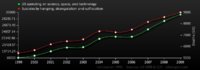
Also, it was a purely observational study, so can at best draw correlations; it can’t really prove anything. Furthermore, many of this sort of observational studies fail to address other lifestyle variables. For example, observational studies that find red meat consumption contributes to cancer often neglect to mention that people who ate more read meat also smoked way more cigarettes. It is also possible that people who drank more in this study also engaged in other detrimental lifestyle choices, or didn’t do other beneficial activities, which could have contributed to the correlation between alcohol and health issues. Are people who drink a lot more likely to smoke? Are they less likely to exercise? Etc. I didn’t see any of these variables addressed, but I was reading the study on my phone, so I may have missed it.
Anyway, correlation =/= causation.
Examples:
Invalid Link Removed
Invalid Link Removed
Invalid Link Removed
Invalid Link Removed
Invalid Link Removed
Anyway, correlation =/= causation.
Examples:
Invalid Link Removed
Invalid Link Removed
Invalid Link Removed
Invalid Link Removed
Invalid Link Removed
Attachments
LoveCompeting
Active Member
Bottom line... gains being damaged by alcohol consumption are blown way out of proportion. You have to abuse alcohol for days to see any serious damage done to protein synthesis. A couple vodkas or beers are not going to do ****!! Especially if you eat a good clean high protein meal before and after.
muscleupcrohn
Legend
I'm pretty sure multiple studies (I think some human and some rodent) have shown that moderate alcohol consumption doesn't really negatively impact recovery. It's just that a lot of people have issues with moderation, especially when it comes to alcohol. But if you can manage to keep it in moderation, the negative effects are very minor, if they even exist, and I'd agree, are blown way out of proportion; some people think that if you even have one beer or shot your workout that day was wasted/ruined.Bottom line... gains being damaged by alcohol consumption are blown way out of proportion. You have to abuse alcohol for days to see any serious damage done to protein synthesis. A couple vodkas or beers are not going to do ****!! Especially if you eat a good clean high protein meal before and after.
Newth
Well-known member
After a LOT of alcohol abuse over the years I have come to find it takes close to half a bottle to prioritise recovery to the alcohol damage over anything else.
At that point a Mcdonalds Double Cheese Burger meal with Tarax Coke is the fastest recovery I have found. Not good but efficient.
At that point a Mcdonalds Double Cheese Burger meal with Tarax Coke is the fastest recovery I have found. Not good but efficient.
LoveCompeting
Active Member
I'm pretty sure multiple studies (I think some human and some rodent) have shown that moderate alcohol consumption doesn't really negatively impact recovery. It's just that a lot of people have issues with moderation, especially when it comes to alcohol. But if you can manage to keep it in moderation, the negative effects are very minor, if they even exist, and I'd agree, are blown way out of proportion; some people think that if you even have one beer or shot your workout that day was wasted/ruined.
Exactly. Say a person goes to the gym early in the morning such as like 6 am. They eat well all day long and since its a Saturday they decide to go out to socialize in the city at a friends pool. So they go out and have about 4 drinks total over the course of the day, just some good vodka with a sugar free mixer. They drink lots of water in between drinks as well. Then afterwards they come home and enjoy a nice big meal consisting of egg whites, ezekiel english muffins, some good natural nut butter and turkey bacon. They then sip on some EAA's with extra ice as well as drinking a couple litre's of water while winding down and watching some tv. They go to bed and wake up the next day completely fine with no damage to recovery.

James Tyr
Active Member
Latch onto something that inherently fades it out of your life.
Ex: I know (scientifically) that if i want to be fit, then the liver plays huge role in that process. If i damage it or hinder it in any way, then i will not be optimal in achieving my goal. I quit drinking not because alcohol was destroying my life and not because i didn't want to get drunk anymore. I stopped alcohol because i convinced myself that it would be impossible to better my body if i toxified my system and slowed crucial systems that i needed for weight loss, gaines, and physic. The whole getting your emotional state and life in order is just a byproduct.
Emotions are hard and there isn't a single human that can say they 100% understand emotions. We can't even say that we have 100% control over them. Outside factors such as people you love or that love you make it harder because the misunderstanding and they are a gateway to your emotional turmoil.
Processes are hard. Becoming sober is hard as a process. Do something you are good at. I.E. Addiction.
Being an addict is a personality trait (formed, learned, grown, & inherited). That means if you really wanted to, you could shift to a new high and get addicted to something stronger than the pull of alcohol or drugs.
All you have to decide is if that new high will be a positive benefactor on your life.
for me it was getting back into the gym. My new drug carries some similar attributes (Monthly payment, wasted $$ on that new edge, physical high, and time away from loved ones). For some people (like my uncle) it turned into building drag cars. etc. you get my point. We are good at addiction. You want to change your addiction to something new? Cool, pick something that has the accidental side effects of getting your sh** together emotionally. Hey, you still like riding the line of the law for that thrill? Even positive addictions can accommodate. If you're into working out, then blow your money on gear and get your fix. You want the illegal thrill? build a fast car or motorcycle and speed down the highway at 130 mph. As long as it gets you off and makes you happy during and after the high wears off. Good luck on your road, wherever it leads.
Ex: I know (scientifically) that if i want to be fit, then the liver plays huge role in that process. If i damage it or hinder it in any way, then i will not be optimal in achieving my goal. I quit drinking not because alcohol was destroying my life and not because i didn't want to get drunk anymore. I stopped alcohol because i convinced myself that it would be impossible to better my body if i toxified my system and slowed crucial systems that i needed for weight loss, gaines, and physic. The whole getting your emotional state and life in order is just a byproduct.
Emotions are hard and there isn't a single human that can say they 100% understand emotions. We can't even say that we have 100% control over them. Outside factors such as people you love or that love you make it harder because the misunderstanding and they are a gateway to your emotional turmoil.
Processes are hard. Becoming sober is hard as a process. Do something you are good at. I.E. Addiction.
Being an addict is a personality trait (formed, learned, grown, & inherited). That means if you really wanted to, you could shift to a new high and get addicted to something stronger than the pull of alcohol or drugs.
All you have to decide is if that new high will be a positive benefactor on your life.
for me it was getting back into the gym. My new drug carries some similar attributes (Monthly payment, wasted $$ on that new edge, physical high, and time away from loved ones). For some people (like my uncle) it turned into building drag cars. etc. you get my point. We are good at addiction. You want to change your addiction to something new? Cool, pick something that has the accidental side effects of getting your sh** together emotionally. Hey, you still like riding the line of the law for that thrill? Even positive addictions can accommodate. If you're into working out, then blow your money on gear and get your fix. You want the illegal thrill? build a fast car or motorcycle and speed down the highway at 130 mph. As long as it gets you off and makes you happy during and after the high wears off. Good luck on your road, wherever it leads.

jim2509
Well-known member
Has anyone here had huge alcohol problems in the past but are now better? I have a problem with alcohol and I need to stop.
Drunk way too much in my 30's as a pissed off veteran and even though have a good job and family i still binged on my days off.
Friend of mine mentioned he used an app on phone called ' I am Sober '. I thought what the hell ill try it.....am 1 month 12 days dry and feel better than i have in years . Dont get me wrong some days i would love a JD and Coke but i know it'd ruin all my effort so i suck it up and push on. Give it a go and see how you get on. I aiming for xmas eve as the next time i have a drink.....then the next mid year special occasion. Once that becomes routine that i only drink on those special dates happy days Ive won.

rascal14
Well-known member
Also, it was a purely observational study, so can at best draw correlations; it can’t really prove anything. Furthermore, many of this sort of observational studies fail to address other lifestyle variables. For example, observational studies that find red meat consumption contributes to cancer often neglect to mention that people who ate more read meat also smoked way more cigarettes. It is also possible that people who drank more in this study also engaged in other detrimental lifestyle choices, or didn’t do other beneficial activities, which could have contributed to the correlation between alcohol and health issues. Are people who drink a lot more likely to smoke? Are they less likely to exercise? Etc. I didn’t see any of these variables addressed, but I was reading the study on my phone, so I may have missed it.
Anyway, correlation =/= causation.
Examples:
Invalid Link Removed
Invalid Link Removed
Invalid Link Removed
Invalid Link Removed
Invalid Link Removed
Just now saw this, but this is awesome lol