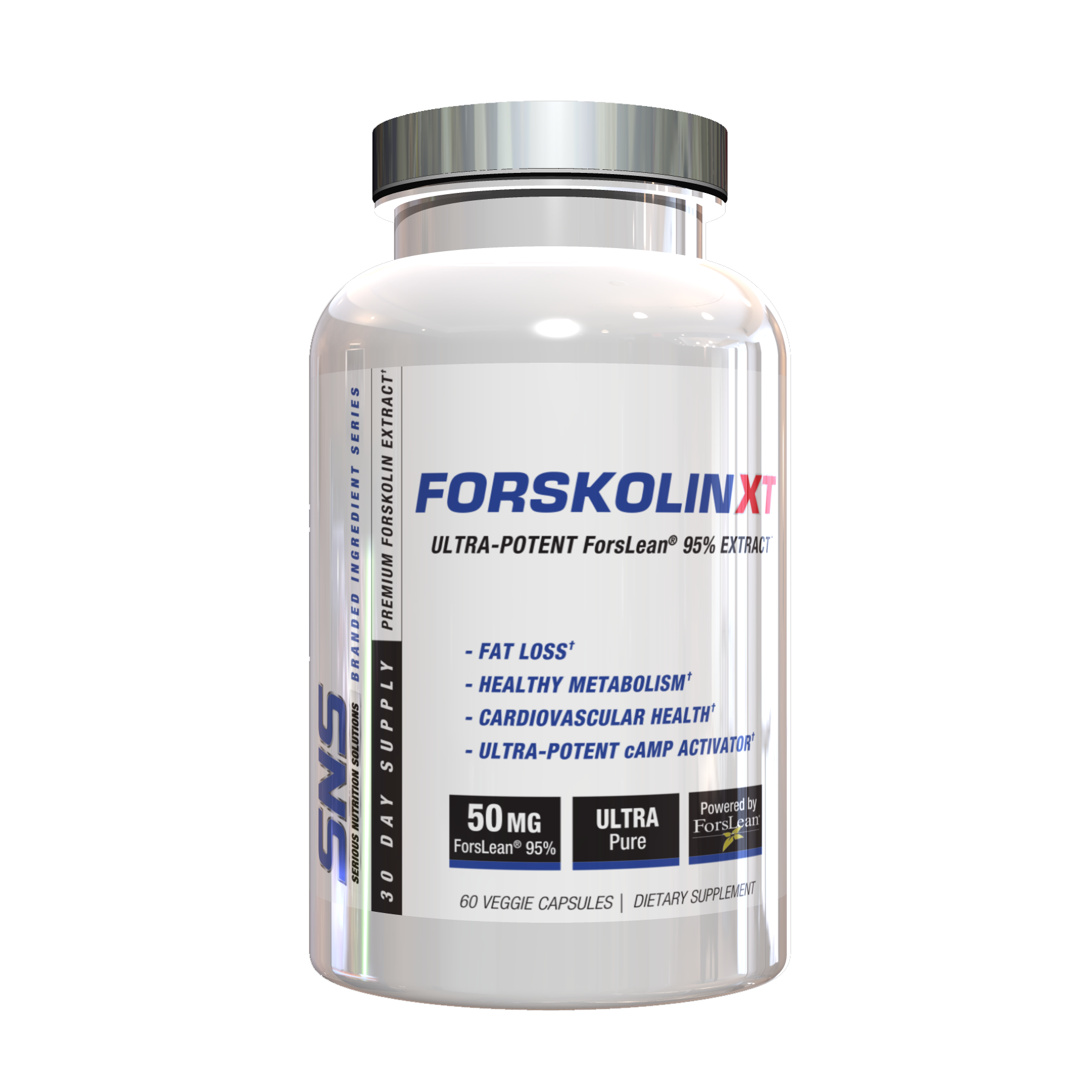
There seems to be a lot of confusion now days about Coleus forskohlii and Forskolin.
Here's kind of a cliff notes summary for anyone that's interested:
- Coleus Forskohlii is an herb.
- Forskolin is a bioactive constituent in the Coleus Forskohlii herb.
- The mg. of Coleus Forskohlii herb does not translate directly to how much Forskolin that you get from it.
- Coleus Forskohlii can be standardized to 10%, 20%, and all the way up to 95%.
- There are a lot of generic extracts on the market that lie about their Forskolin content.
- There are some brands that lie about using Sabinsa's Forslean extract; they'll list it on the label claiming to use that one but then use generic material trying to save money and increase profits.
- If you look at many of the reports of upset stomach related to Coleus Forskohlii, it is from the non-branded extracts. And in the cases where it does happen with Sabinsa's Forslean, you'll generally notice that the higher the percentage extract, the lower the instances of stomach upset.
- (My theory) This could be and likely is because its not the Forskolin itself that is causing the upset but something else in the Coleus Forskohlii herb that is causing that, which would line up with the commonly seen feedback that there is less stomach upset with the higher percentage extracts. Because for example:
- 250 mg. Coleus Forskohlii std. to 10% Forskolin = 25 mg. Forskolin & 225 mg. other material
- 125 mg. Coleus Forskohlii std. to 20% Forskolin = 25 mg. Forskolin & 100 mg. other material
- 26.32 mg. Coleus Forskohlii std. to 95% Forskolin = 25 mg. Forskolin & 1.32 mg. other material
I hope this all makes sense.