Guest viewing limit reached
  • You have reached the maximum number of guest views allowed
  • Please register below to remove this limitation

CLA develops lipodystrophy in mice

narraboth

Member
Conjugated linoleic acid supplementation reduces adipose tissue by apoptosis and develops lipodystrophy in mice.
N Tsuboyama-Kasaoka et al.
10.2337/diabetes.49.9.1534 Diabetes September 2000 vol. 49 no. 9 1534-1542


This paper put CLA in mices and see how CLA influence fat spread in their bodies. They feed mices with food which contains 10% fat of total energy, with or without 1%wt/wt CLA.
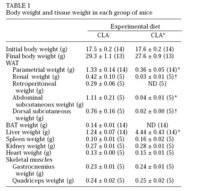
The results showed that there was a big change in their body composition. Almost all fat on body surface decreased. HOWEVER, the weight of liver increased for almost 4 times. (table)

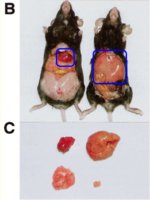
the anatomy picture show a shocking difference on their livers.

It's an interesting result. As we know, CLA won't boost your metabolic rate. So if you eat in the same amount of fat, you do the same amount of excercise, how come you will have a smaller waist? The fat must have gone somewhere.
 

Attachments

  • table.JPG
    table.JPG
    66.4 KB · Views: 4,150
  • 169301_10.jpg
    169301_10.jpg
    37.6 KB · Views: 5,608
Then read this one:

THE ROLE OF CONJUGATED LINOLEIC ACID IN HUMAN HEALTH

Perspective on the safety and effectiveness of conjugated linoleic acid1,2,3,4
Michael W Pariza
1 From the Food Research Institute, Department of Food Microbiology and Toxicology, University of Wisconsin-Madison


ABSTRACT

The amount of scientific literature on conjugated linoleic acid (CLA) is growing at a phenomenal rate. Animal studies and clinical trials indicate the possibility that CLA could be useful in improving human health in a number of areas, eg, controlling body fat gain and enhancing immunity while also reducing inflammation and other adverse effects typically associated with immune enhancement. The background of this growing research field and mechanistic insights from animal and cell culture experiments are briefly reviewed. Experimental and clinical data relating to the safety and effectiveness of CLA in humans are presented and discussed.


Key Words: Conjugated linoleic acid • immunity • body-weight control • diabetes • atherosclerosis

Regarding the fat liver, it is mentioned that it was not reproduced in other species and rats are sensitive to CLA.
 
Then read this one:

THE ROLE OF CONJUGATED LINOLEIC ACID IN HUMAN HEALTH

Regarding the fat liver, it is mentioned that it was not reproduced in other species and rats are sensitive to CLA.

Thanks!
I read it.... but I personally think it's a bit too positive. It's not a commercial AD but a bit like 'yeah, we should design a product and make a good busniess'.

yeah, surely we are not rats. Maybe that's why CLA is not that effective to us either. :P
 
I've read enough bad news about CLA in recent weeks that I'm going to stop taking it. Especially since I'm running Hdrol right now and I don't need to put any extra pressure on my liver.

It sucks because I JUST ordered another bottle from Bulk Nutrition! I guess it'll just sit and collect dust until some comprehensive studies come out demonstrating that it's safe and helpful.
 
I've read enough bad news about CLA in recent weeks that I'm going to stop taking it. Especially since I'm running Hdrol right now and I don't need to put any extra pressure on my liver.

It sucks because I JUST ordered another bottle from Bulk Nutrition! I guess it'll just sit and collect dust until some comprehensive studies come out demonstrating that it's safe and helpful.

damn ive just got some -what else have you read?
 
Do not fear Corsa and Greaser... my front porch can fit two boxes as once.

just been reading it can cause High blood sugar (hyperglycemia), as some forms of CLA may make your body more resistant to insulin
High C-reactive protein (CRP), an inflammatory protein that can be a sign of problems
Low HDL cholesterol ("good" cholesterol) levels

As im taking Neovar to shuttle nutrients into muscle , seems cla might have a negative effect on that.?
 
damn ive just got some -what else have you read?

I couldn't paste the graphs into my post, but you can see the originals at this URL: CLA as unhealthy as synthetic trans fatty acids

CLA as unhealthy as synthetic trans fatty acids


According to a meta-study by Dutch nutritionists, CLAs are just as bad for your heart and blood vessels as the dreaded synthetic trans fatty acids that the food industry has been using for years in cookies, margarines and junk foods. CLA’s popularity as a nutritional supplement is on the wane.


When you hear the words ‘trans fatty acids’ you probably think of ones like the formula at the top of the diagram here. This is elaidic acid, a trans fatty acid that is manufactured from a natural fatty acid. The advantage of trans fatty acids is that they don’t go rancid quickly and they are what give bread and baked products a crispy texture. Nutritionists in the 1980s and 90s discovered that trans fatty acids increase the ‘bad cholesterol’ [LDL] in the body, and at the same time lower the ‘good cholesterol’ [HDL] thereby boosting the chance of a heart attack.


Milk and meat fats contain natural trans fatty acids, such as CLAs. The third structural formula in the diagram is of CLA. CLAs are produced in cows from vaccenic acid, another natural trans fatty acid in milk and meat, represented by the second structural formula in the figure above.


CLAs improve the body composition. They reduce the amount of body fat, probably by inhibiting fat cells’ uptake of fatty acids. Instead the fatty acids end up in the muscle cells, which therefore get more energy and grow. Sounds good, but there’s also a risk of the fatty acids getting into the organs – not healthy at all. The effect of CLAs on body composition has already been demonstrated, but is modest.


The Dutch nutritionists fear however that CLAs are just as risky as the trans fatty acids that the food industry has been putting in our food for years. For their publication in PLoS ONE, therefore, they analysed 39 trials in which people had been given trans fatty acids and the of these effects on heart and blood vessels had been measured. Seventeen of the studies were on CLAs, and six were on natural trans fatty acids like vaccenic acid.


The graph below shows that all sorts of trans fatty acids raised the concentration of the LDL by approximately the same amount. Statistical calculations produced the straight lines.


All sorts of trans fatty acids lowered the concentration of HDL.


Cardiologists look at the ratio between HDL and LDL. The smaller it is, the better. It won’t come as a surprise that all trans fatty acids worsened the ratio by about the same amount.


Our diet does not contain terribly high amounts of natural trans fatty acids as we now eat less animal fat. If we could eliminate the last remaining trans fatty acids from our diet, then we might reduce our chance of heart and circulatory disease by 1.5 – 6 percent in theory. That’s not a huge amount. In fact, the impact of long-term CLA supplementation may be more serious.


"Intakes from supplements can easily reach 3 grams of CLA a day", the researchers write in their conclusion. "This should increase the LDL to HDL cholesterol ratio by 0.050, which would correspond with a 3 to 12 percent increase in the risk of cardiovascular disease."


That’s still not much. A rule of thumb in nutritional research is that something only becomes interesting if it doubles or halves risk. On the other hand though: CLAs are expensive and their effect is modest. If CLAs also increase your risk of cardiovascular disease it may be a reason for you to go in search of an alternative supplement.


Source:
PLoS ONE 5(3): e9434.

 
I couldn't paste the graphs into my post, but you can see the originals at this URL: CLA as unhealthy as synthetic trans fatty acids

CLA as unhealthy as synthetic trans fatty acids


According to a meta-study by Dutch nutritionists, CLAs are just as bad for your heart and blood vessels as the dreaded synthetic trans fatty acids that the food industry has been using for years in cookies, margarines and junk foods. CLA’s popularity as a nutritional supplement is on the wane.


When you hear the words ‘trans fatty acids’ you probably think of ones like the formula at the top of the diagram here. This is elaidic acid, a trans fatty acid that is manufactured from a natural fatty acid. The advantage of trans fatty acids is that they don’t go rancid quickly and they are what give bread and baked products a crispy texture. Nutritionists in the 1980s and 90s discovered that trans fatty acids increase the ‘bad cholesterol’ [LDL] in the body, and at the same time lower the ‘good cholesterol’ [HDL] thereby boosting the chance of a heart attack.


Milk and meat fats contain natural trans fatty acids, such as CLAs. The third structural formula in the diagram is of CLA. CLAs are produced in cows from vaccenic acid, another natural trans fatty acid in milk and meat, represented by the second structural formula in the figure above.


CLAs improve the body composition. They reduce the amount of body fat, probably by inhibiting fat cells’ uptake of fatty acids. Instead the fatty acids end up in the muscle cells, which therefore get more energy and grow. Sounds good, but there’s also a risk of the fatty acids getting into the organs – not healthy at all. The effect of CLAs on body composition has already been demonstrated, but is modest.


The Dutch nutritionists fear however that CLAs are just as risky as the trans fatty acids that the food industry has been putting in our food for years. For their publication in PLoS ONE, therefore, they analysed 39 trials in which people had been given trans fatty acids and the of these effects on heart and blood vessels had been measured. Seventeen of the studies were on CLAs, and six were on natural trans fatty acids like vaccenic acid.


The graph below shows that all sorts of trans fatty acids raised the concentration of the LDL by approximately the same amount. Statistical calculations produced the straight lines.


All sorts of trans fatty acids lowered the concentration of HDL.


Cardiologists look at the ratio between HDL and LDL. The smaller it is, the better. It won’t come as a surprise that all trans fatty acids worsened the ratio by about the same amount.


Our diet does not contain terribly high amounts of natural trans fatty acids as we now eat less animal fat. If we could eliminate the last remaining trans fatty acids from our diet, then we might reduce our chance of heart and circulatory disease by 1.5 – 6 percent in theory. That’s not a huge amount. In fact, the impact of long-term CLA supplementation may be more serious.


"Intakes from supplements can easily reach 3 grams of CLA a day", the researchers write in their conclusion. "This should increase the LDL to HDL cholesterol ratio by 0.050, which would correspond with a 3 to 12 percent increase in the risk of cardiovascular disease."


That’s still not much. A rule of thumb in nutritional research is that something only becomes interesting if it doubles or halves risk. On the other hand though: CLAs are expensive and their effect is modest. If CLAs also increase your risk of cardiovascular disease it may be a reason for you to go in search of an alternative supplement.


Source:
PLoS ONE 5(3): e9434.
tks -ill throw it
 
Never saw much effect from it anyway. Companies were hyping it 10 years ago as a fatloss agent and it never worked for me.
 
Back
Top